Tallgrass Prairie National Preserve Guide


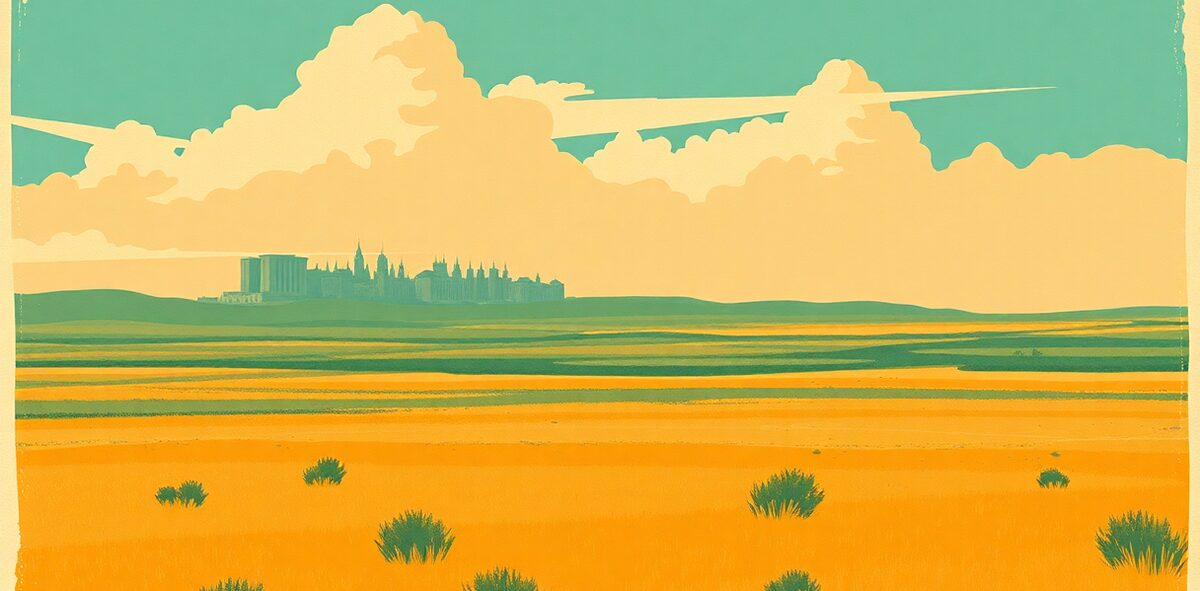
Non-negotiable, and Kansas’s #1 pick: this is the last big stand of tallgrass prairie on the planet, and standing inside it — grass over your head, wind moving it in waves to an empty horizon — is the closest you’ll come to seeing the continent as it was before the plow.
Why it earns the drive
Tallgrass prairie once covered 170 million acres of North America, from Indiana to the eastern edge of the Great Plains. Farms and plows took nearly all of it: less than 4 percent survives, and most of what’s left is here in the Kansas Flint Hills, where the ground was too rocky and shallow to break. The preserve protects roughly 11,000 acres of it, established in 1996 and run jointly by the National Park Service and The Nature Conservancy — a rare public-private split.
Three things the book blurb skips. First, this isn’t restored grassland — it’s the single largest protected remnant of a lost ecosystem, never plowed. Second, a bison herd reintroduced in 2009 now roams an 1,100-acre unit, grazing the way buffalo did for ten thousand years and rebuilding the prairie’s structure. Third, the anchor is the 1881 Spring Hill Ranch, a three-story limestone house and stone barn built by cattleman Stephen Jones, so the human story of Flint Hills cattle country stands right alongside the wild one.
The move
Hike the Scenic Overlook Trail, a roughly 6-mile round trip that climbs onto the ridge where the grass rolls away unbroken in every direction. Short on time? The 1.75-mile Bottomland Trail loops past the old stone barn and Fox Creek. Either way, go at sunrise or the last hour before sunset, when raking light sculpts the hills and the wind — which blows most of the day out here — usually settles. Time it for late August through October and the big bluestem can top 8 feet. Watch for greater prairie-chickens, upland sandpipers, and dickcissels; this is prime grassland-bird country.
The honest catch — what to skip
Come in the wrong season and you’ll wonder what the fuss is about. Midsummer is green but the grass hasn’t reached height; winter is bleached, brown, and wind-hammered. Skip the drive if all you’ll do is stand in the parking lot — the payoff is a mile in, past where the buildings disappear. And keep your distance from the bison: the herd shares two trails, and every year someone treats a 2,000-pound animal like a photo prop. Stay 125 yards back, full stop. There’s no lodging and limited food in tiny Strong City and Cottonwood Falls, so fuel up and pack in.
Nearby
This is the crown jewel of the 48-mile Flint Hills Scenic Byway, the K-177 run that ends the “Kansas is flat” argument. Ten minutes north sits Council Grove, the great Santa Fe Trail outfitting town, where you can eat frontier fried chicken at the Hays House, the oldest restaurant west of the Mississippi. It anchors the eastern side of the Kansas guide — pair it with the western chalk-country picks for the state’s full range.
| Cost | Free |
|---|---|
| Time needed | half a day |
| Best season | late spring for flowers, fall for tall grass |
| Where | Strong City · Flint Hills Alabama |
📍 Where: Tallgrass Prairie National Preserve, Strong City, Kansas · 38.4470, -96.5775
Common questions
Where is Tallgrass Prairie National Preserve and how do you get there?
Two miles north of Strong City on K-177, the Flint Hills Scenic Byway, in Chase County. It's about 2 hours southwest of Kansas City and 90 minutes northeast of Wichita. The visitor center and the historic Spring Hill Ranch limestone barn sit right off the highway; the trailheads start behind them.
How much does it cost to visit?
Free. There's no entrance fee, no permit, and no charge for the trails or the ranch-house grounds. The National Park Service runs it jointly with The Nature Conservancy, which owns most of the land.
Can you see the bison, and how close do they get?
Usually, yes. A herd reintroduced in 2009 roams a fenced 1,100-acre unit crossed by the Windmill and Scenic Overlook trails. Stay at least 125 yards back — these are wild 2,000-pound animals, not petting-zoo stock. Fall rut is when the bulls turn unpredictable.
What's the best trail if you only have a couple hours?
The Scenic Overlook Trail — a roughly 6-mile round trip that climbs onto the ridge for the horizon-to-horizon view, though the first mile alone gets you into open grass with the buildings out of sight. For a shorter loop, the 1.75-mile Bottomland Trail follows Fox Creek past the 1881 stone barn.
When is the grass actually tall?
Late August into October. Big bluestem, the signature grass, can top 8 feet by fall. Late spring (May–June) is the wildflower show; midsummer is green but not yet at full height, and winter is bleached and brown.
Is it worth the drive?
Non-negotiable. Tallgrass prairie once covered 170 million acres of North America and less than 4 percent survives — this is the largest protected piece of it left. There is nowhere else you can stand inside the intact ecosystem at this scale.
One of 120 in Kick the Bucket List: Kansas
The full book is 120 checkable picks like this one — with a Bucket Rating on every entry telling you what's worth the drive and what to skip. A keepsake you fill in and score.
Get the Kansas book →More Kansas Kick-It Picks
Watch Half a Million Birds Drop Into Cheyenne Bottoms
Worth the driveTouch a Spacecraft That Went to the Moon
Non-negotiableWalk the Santa Fe Trail in Council Grove
Worth the driveDrive the Flint Hills Scenic Byway
Non-negotiableVerified 2026-07. Prices and hours change — confirm before you drive. Something wrong? Tell us.